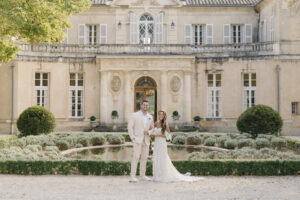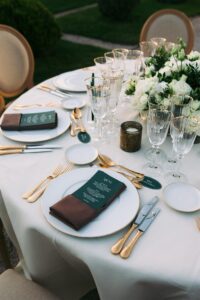

Provence isn’t a place you do—it’s a place you sink into.
It rewards couples who design with rhythm, not rush. And that’s exactly why the smartest wedding weekends here aren’t built on “more.” They’re built on flow.
If you want your guests to feel hosted (not managed), reduce transport chaos, and keep the magic high from the first apéritif to the last goodbye, there’s one structure I come back to again and again:
- One home base
- Three beautifully paced events
- Short transfers (or none at all)
This is the slow-luxury alternative to beach-club-hopping energy: vineyards, villages, private mas, golden-hour dinners… and a weekend that feels effortless because it’s built like a story.
Note: What to expect from the best wedding planners in Provence
Why “one base” wins in Provence
When everyone sleeps in one place (or in a tight cluster nearby), everything gets easier—and more elegant.
Less guest fatigue (and more presence)
Provence is sensory. It’s sun, stone, lavender, late dinners, and long conversations. The moment you add daily hotel changes, scattered accommodations, or multiple far transfers, you don’t create “adventure.” You create friction.
With one base, guests can actually settle in:
- No daily packing and repacking
- No constant regrouping
- No “Where do I need to be next?” anxiety
The result is subtle but powerful: guests arrive at each moment calmer, more open, more present.
Fewer logistics (and fewer things that can go wrong)
A wedding weekend is a moving ecosystem—especially with international guests. One base simplifies the entire operation:
- One shuttle loop
- One set of directions
- One point of contact
- One timeline logic
And when the foundation is simple, you have more space to elevate details: the welcome drink that appears at the perfect time, the lighting that makes the dinner feel cinematic, the transitions that feel natural.
More connection (the kind you can’t force)
The best wedding weekends aren’t remembered for the number of events. They’re remembered for the in-between moments:
- Morning coffee by the pool
- A spontaneous pétanque match
- A late-night conversation under the plane trees
When guests share a base, connection happens without effort. They mingle organically all weekend, and the celebration feels like a shared experience—not a series of appointments.
A stronger story
One base creates continuity. The weekend feels like one immersive chapter, not three separate events stitched together.
Your guests feel like they’re living inside a Provençal film—without you running a production.
The “one base, three events” structure (luxurious, not exhausting)
The goal is not to fill every hour. The goal is to pace the weekend so it feels generous, intentional, and easy.
Event 1: Welcome night (easy, social, low-pressure)
Your first moment sets the tone. It should feel like an opening scene: warm, relaxed, and designed for connection.
Your objective: bring everyone together without demanding too much.
Option A: Garden apéritif + pétanque + rosé
This is Provence at its most effortless.
- Start late afternoon (golden hour is your best friend)
- Light bites and local rosé
- Relaxed music (nothing too “event-y”)
- A few soft activities: pétanque, a photo corner, a guestbook moment
Why it works: it creates instant community without turning into a marathon.
Option B: A casual market night or chef’s table tasting
For couples who want something slightly more curated—but still unfussy.
- A “Provence tasting” menu: seasonal, local, not complicated
- Communal tables, candlelight, and one short welcome toast
- A clear end time (so guests can rest)
Keep it short-ish. You’re setting the tone, not hosting an endurance test.
Pro tip: If you’re doing a multi-day celebration, your welcome night should never compete with the wedding day. It should support it.
Event 2: Wedding day (the main story, with a siesta-friendly rhythm)
Provence has its own rules: heat, light, and pace. Design the day like you respect the destination.
A flow that works beautifully in summer
- Late start to honor jet lag and avoid peak heat
- Ceremony + dinner on-site (or one short transfer max)
- Golden-hour portraits instead of midday stress
This rhythm doesn’t just feel better—it photographs better, too.
Two non-negotiables to solve early
1) Sound and curfew realities
Curfews, sound limits, and neighbor considerations vary widely in Provence. The key is to align the venue with your party style and plan the sound strategy early.
- Confirm curfew rules in writing
- Plan DJ placement and speaker direction intentionally
- Consider indoor/outdoor transitions (so the energy stays high without conflict)
2) A shuttle loop plan
Transport is where “luxury” becomes either effortless or chaotic.
- One base = one loop
- Clear pickup windows
- A single coordination point
When departures are smooth, the night ends with grace—not confusion.
If you solve these two pieces upfront, everything else feels lighter.
Event 3: Day-after (recovery + connection, open-house style)
The day-after should feel like: “Come as you are. Stay as long as you want.”
No speeches. No strict timeline. No pressure.
Option A: Poolside brunch with live stations
A classic for a reason.
- Fresh fruit and pastries
- Eggs/omelet station
- Rosé bar (yes, it’s Provence)
- Lounge seating, shade, and a flexible flow
The luxury here is comfort: guests can drift in and out, and the mood stays soft.
Option B: Village market morning + picnic / vineyard lunch
For couples who want a gentle “Provence moment” without turning it into a second wedding day.
- One relaxed meet-up time
- One simple plan (one transfer, one location)
- Guests can opt in without pressure
The secret: optional moments—not mandatory marathons.
The struggle points this structure solves (and how)
This is why “one base, three events” works so well in Provence: it solves the problems before they become stress.
Heat and timing
Provence is stunning—and in summer, it’s hot.
Build the weekend around the reality of the destination:
- Plan a siesta-friendly schedule
- Avoid midday ceremonies in peak summer
- Prioritize shade, hydration, and slower transitions
A well-paced timeline is not just practical. It’s part of the guest experience.
Transfers and transport chaos
Multiple venues can be beautiful, but too many transfers create friction fast.
One base simplifies everything:
- One shuttle loop
- No scattered hotels
- No constant regrouping
Your guests feel taken care of because they’re not navigating logistics all weekend.
Guest energy (and wedding weekend fatigue)
A multi-day celebration should feel generous—not draining.
This structure protects guest energy:
- Welcome night stays light
- Wedding day holds the main emotional arc
- Day-after is open-house style
Guests can rest without feeling like they’re missing the story.
Dress code confusion
If you want guests to look great and feel comfortable, give them guidance that’s actually wearable.
A simple, clear dress code works best:
- “Provence chic” (light fabrics, breathable elegance)
- Practical notes: cobblestones, grass, sun, evening breeze
- A short packing guide beats vague inspiration every time
This is one of the easiest ways to elevate the weekend visually—without making guests anxious.
Noise and curfew realities (how to keep the party without drama)
In Provence, the party is possible—but it needs strategy.
- Choose venues aligned with your party style
- Plan sound early (DJ setup, placement, indoor/outdoor transitions)
- Use transport timing to keep departures calm and controlled
When you plan the constraints with intention, the celebration feels free.
How to choose the right “home base” in Provence
Not all bases are created equal. The right one supports flow.
What to look for
- On-site accommodation (or a tight cluster nearby)
- A layout that supports multiple moments (welcome, ceremony, dinner, brunch)
- Shade and comfortable outdoor spaces
- A realistic plan for sound and late-night flow
- Easy access for vendors and shuttles
The most common mistake
Choosing a venue for the photos, then trying to force the logistics.
In Provence, true luxury is when the venue and the weekend rhythm match.
Sample itinerary: One base, three events (Provence weekend flow)
Use this as a pacing reference—not a rigid template.
- Day 1 (Arrival + Welcome)
- Late afternoon: guests arrive and settle in
- Early evening: garden apéritif + relaxed welcome moment
- Night: optional wind-down (no forced after-party)
- Day 2 (Wedding Day)
- Late morning: slow start + prep
- Late afternoon: ceremony
- Evening: dinner on-site
- Night: party with a pre-planned sound/curfew strategy
- Day 3 (Day-After)
- Late morning to early afternoon: open-house brunch or vineyard lunch
- Flexible departures
The best weekends feel spacious. Leave room for real life.
Conclusion: Provence doesn’t need more events—it needs a better rhythm
A Provence wedding weekend doesn’t need more—it needs flow.
With one home base and three well-paced moments, you get the best kind of luxury: the kind that feels easy. Guests feel cared for. The weekend holds together. And you stay present inside your own celebration.
FAQ
How many days should a Provence wedding weekend be?
Three days is the sweet spot: welcome night, wedding day, and a relaxed day-after. It feels immersive without exhausting guests.
Do guests need to rent a car in Provence?
Ideally, no. With one base and a shuttle loop, guests can relax fully (and enjoy the rosé) without logistics stress.
What time should a summer ceremony start in Provence?
Later is usually better—late afternoon into golden hour—so you avoid peak heat and get the most flattering light.
Is it better to host everything on-site?
When possible, yes. On-site ceremony + dinner (or one short transfer max) is the simplest way to keep the weekend seamless.
What’s the best day-after format?
Open-house style: pool brunch or a simple vineyard lunch. The goal is connection without obligation.